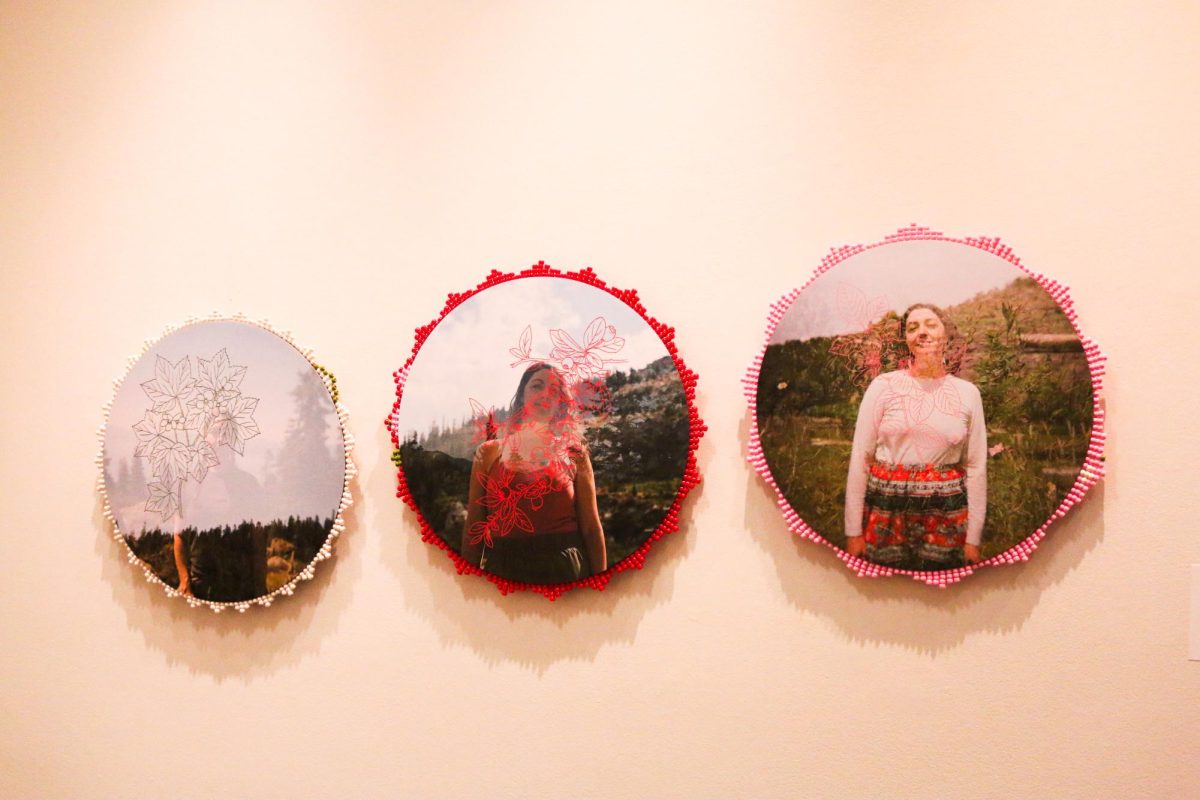
This year, Whitworth University has selected interdisciplinary artist Epiphany Couch for the Carlson Commemoration’s Indigenous Artist Residency.
During her residency, which runs from Oct. 13 to Nov. 7, Couch will host a series of events and workshops, while also creating four original works of art. In addition to her artist lecture held on Oct. 13, she will lead a Panel Discussion for Creatives on Oct. 28 at The Hive in downtown Spokane. Her work will be featured in an art exhibition and closing reception on Nov. 4, followed by an Open House Art Exhibition from Nov. 5-7.
“How cool it is that this residency is in existence,” said Couch. “There’s not many like it out there that I’m familiar with. I think it’s kind of a unique opportunity, and I’m excited to see what I learn from it and what the students can share with me and what the faculty can share with me.”
Based in Portland, Couch is of Puyallup (spuyaləpabš in the Southern Lushootseed dialect), Yakama and mixed European descent. Her work explores generational knowledge and storytelling, connection to the land and each other and uncovering stories that are embedded in history.
“I have a lot of curiosity about those things and unanswered questions that I’m trying to investigate or become closer to,” said Couch, “I think the land in particular still has so many mysteries, even as scientists know more about it, and it’s just kind of like a well of inspiration and curiosity.”
Couch’s inspiration for an art piece can come from many different places.
“Sometimes it can just be a conversation that I had with someone or a story that someone told me,” said Couch, “Sometimes it’s dreams, and I’ll have a dream about someone, and they’ll tell me something, and then that’ll kind of lead me down the path of research or exploring imagery.”
After the initial idea is formed, Couch moves on to research.
“Research can be pretty typical, like going to a library or the internet, but then other times, it’s like me calling my mom and asking her ‘Oh, what do you know about this person?'” said Couch, “From there, it’ll turn into me ideating about how to kind of take all of that research and all of the inspiration and figure out how to represent it visually.”
Despite thorough planning, Couch’s work often changes as she continues to work on it.
“Rarely the work ends up being exactly what I envisioned in the first place,” she said, “I always try to stay open to that too, because I do think that that’s like the spirit of creativity is kind of guiding us where we need to go, even if maybe our brains are resisting it, there’s like a spirit inside of us that’s guiding us.”