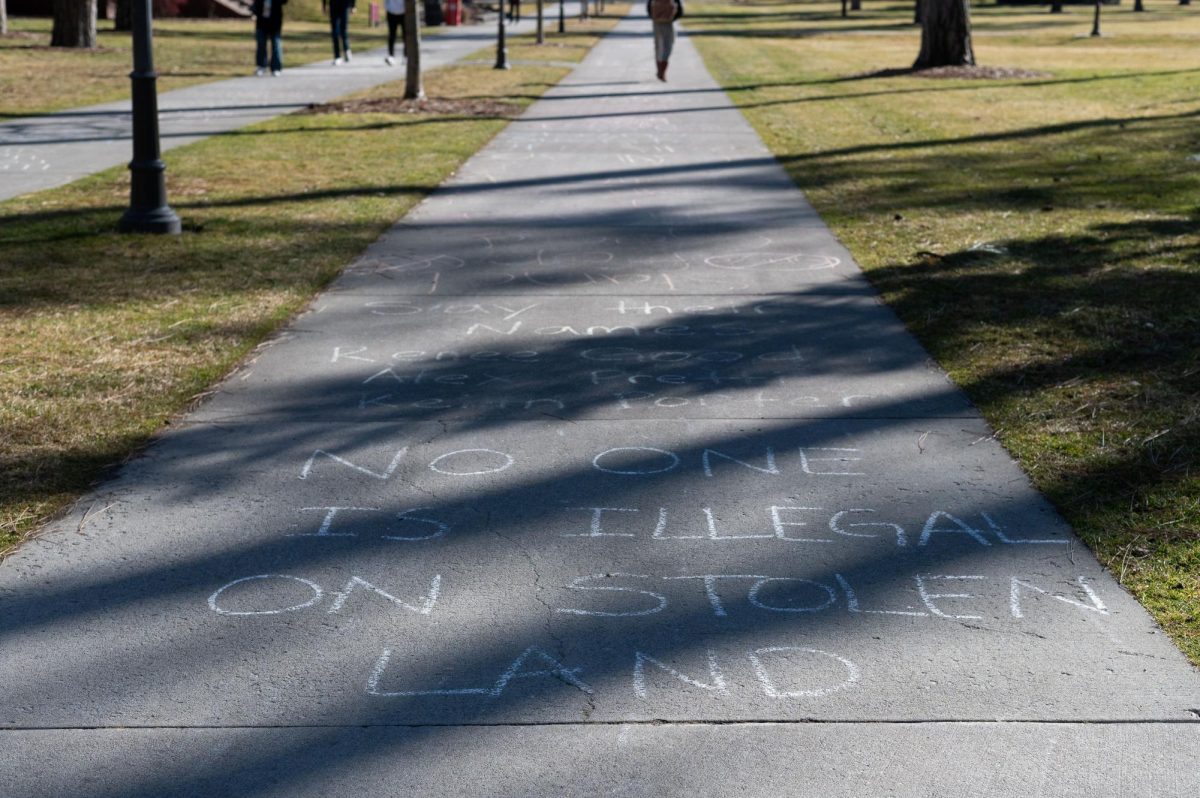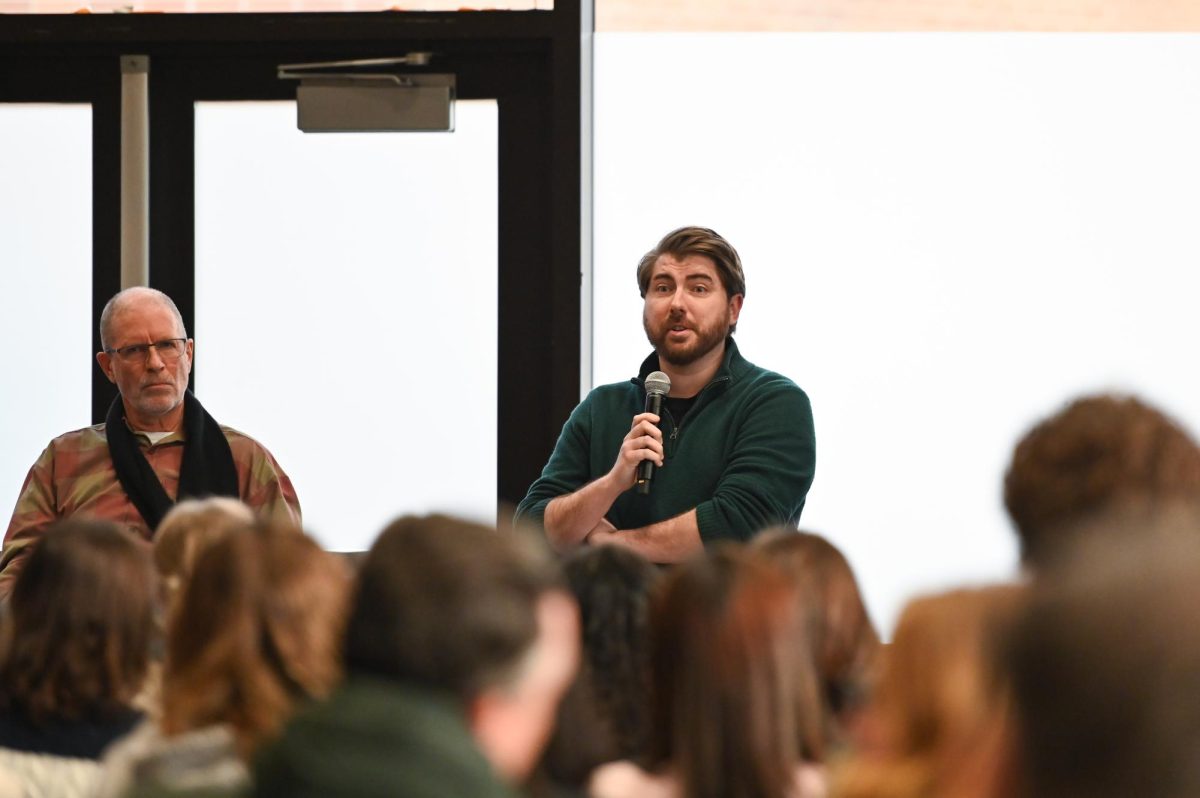
Whitworth’s Office of Church Engagement worked with Student Affairs to host a panel talking with Reverend Mindy Smith, Dr. Kent McDonald and Jer Swigart about their experiences while in Minnesota during the height of ICE’s presence. Dr. Matt Rains provided the political context that brought this conflict on.
The Political Context
Three panelists went to Minneapolis, Minn. with the goal to inspire peace alongside clergy members and the community. Rains, a political science professor, opened the panel talking about how America arrived at the conflict in Minneapolis. Panelists said how the action in Minnesota is being called the biggest immigration action in history.
After President Donald Trump took office once again in 2025 Immigration and Customs Enforcement’s (ICE) budget was increased from around $6 billion to $85 billion. Additionally, as of Sep. 8, 2025, ICE is now allowed to use “physical appearance and language use” to stop and question civilians on the street. At the time, the Supreme Court claimed that this doesn’t hinder fourth amendment rights.
“The message that is being sent with the brutality is a commonality that we’ve seen across the first year of the Trump administration,” Rains said in an interview following the event.
Observations and Impacts
By the time the panelists got there, “20 of the people in [this] community had been taken in the last two weeks” and they were all students with visas, said Swigart.
The panelists described clergy members and people in the community participating in protests and community engagement events. One instance was standing outside of a Target to protest their cooperation with ICE, despite Target claims of being a community-oriented store chain.
“We were there to witness. We were there to be in solidarity. We were there to learn,” said Swigart.

McDonald is a Young Life Regional Trainer, Campus Ministry and Lecturer in Practical Theology. He said it’s not an ‘if’ this will happen in Spokane, but a question of “when.”
“It’s happening in Minneapolis in a very unique way. But it’s also happening on the streets of Spokane,” McDonald said.
In Minnesota, a 5 year old boy was taken alongside his father by ICE agents. Similarly, Spokane saw a 10 year old girl have the same fate await her on her way to school. Both of these children have since returned back to their homes.
Rains explained that the ICE operations in Minnesota are still going on, and this is further backed by the Minnesota House of Representatives, as of Mar. 11. He mentioned how, because of the recent air strikes in Iran and the partial release of the Epstein files, ICE movement isn’t on the forefront.
“The place that we’re at now, Minneapolis is still going on, but it’s almost like an afterthought in American politics,” said Rains. “There’s all of these conflating issues that are all happening in the same juncture.”
Take Aways
Phoebe Birchfield, a Resident Assistant at Whitworth, attended the event. She expressed how she expected the panel to focus more on their firsthand experiences than what their goals were while in Minnesota.
“There were a couple good insights as to like what’s going on in terms of, like, the immigrant population in Minnesota, what’s going on in terms of protests, but it was, like, much more focus on like what the clergy were doing there,” Birchfield said. “Which I thought was good because I haven’t seen a lot of information about that stuff. But I also, kind of, was a little bit more interested to hear sort of like a bigger picture, an account.”
Birchfield held a prime time event in her residence hall addressing the emotional impacts of the state of our country, the recent events nationwide and, more specifically, Minneapolis.
“We are sitting in the anxiety of, like, it’s overwhelming, it’s hard to process, it’s hard to take in online,” Birchfield said.
The panelists reminded students about the various resources on campus within the international center and the food pantry in the HUB, which is always taking donations. Additionally, Birchfield said how this event encouraged her to engage with the wider Spokane community.
“Phones are a great tool to stay informed, and social media is a great tool to stay informed. But also, recognizing that, like, that takes a huge mental toll and maybe trying to search in the real world for ways to help people,” Birchfield said.
Rains reinforced the notion that taking action can impact the actions taken by the government.
“I think for regular people, what Minneapolis really demonstrated was that you can face authority in a way that is active, in a way that is putting yourself on the line,” Rains said.