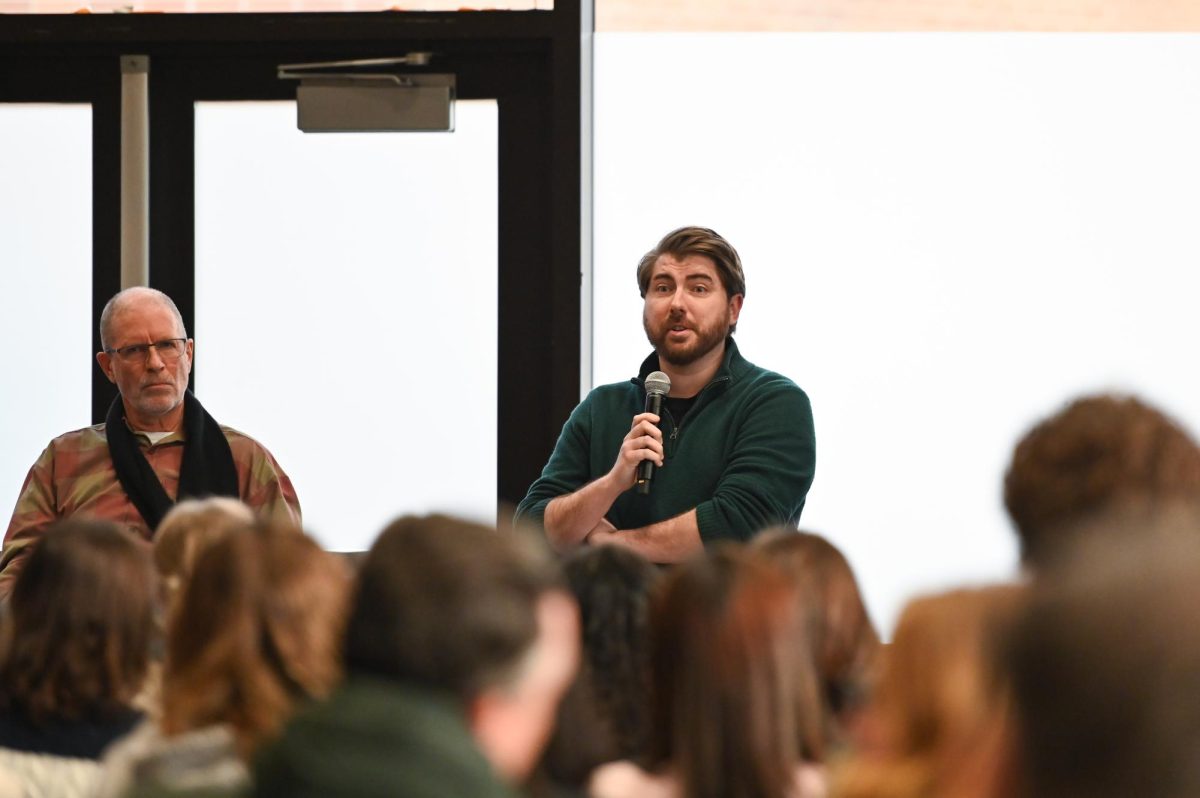
On Jan. 20, Vernon Glass woke up around 2 a.m. to travel to Olympia, WA, where he met with President Scott McQuilkin. McQuilkin and Glass conversed with Washington state senators and representatives to encourage the reinstatement of the Washington College Grant for four-year private institutions. As the ASWU student advocacy & cultural engagement coordinator, Glass went to represent students at Whitworth University who receive these grants and rely on the Grant for financial support in higher education pursuits.
The guest list included state Sen. Riccelli, who is the representative of the 3rd legislative district in Spokane. Sen. Riccelli has previously emphasized the importance of higher education in Washington.
During the legislative session in early 2025, Washington state decreased the total amount of funds allocated for private universities from $9,700 to $6,500. This change is to take effect during the 2026-2027 academic year. For public universities, the grant will still cover full tuition costs.
Additionally, the Washington College Bound Scholarship will also be decreased substantially for private universities like Whitworth University, Gonzaga University and Pacific Lutheran University. It would be reduced from $13,000 to $6,800.
Traci Stensland, assistant vice president of student financial services, spoke on McQuilkin‘s presence at the meeting, stating, “He represents, not just Whitworth, but independent colleges and, so, he’s going to advocate for the opportunities that those independent colleges provide in higher education.”
McQuilkin and Glass are currently working with Katia Passerini, president of Gonzaga University, to lobby for the passing of Senate Bill 5828 and House Bill 2567. These would reinstate up to 50% funding of the reduced grants.

“It’s not just a promise broken to students across the state, but it’s just a promise broken in general. And for this to be restored, it would be restoring that promise and allowing students to garner the education that they’ve been waiting for their whole entire lives,” Glass said.
Both Stensland and Josh Hibbard, vice president of enrollment management, stressed the importance of Whitworth students not panicking about the potential shifts in financial aid. “I just don’t want them to panic,” Stensland said about students’ next steps.“The biggest thing is, like, come talk to your financial aid counselor. Let’s look at options.”
“Whitworth does a lot of personal troubleshooting with each individual student in many areas, especially financial aid,” Hibbard added. “Our financial aid counselors work with every individual student to ensure the best of our ability that as much source of aid, scholarships and opportunity happens so they can continue their education here,” he said.
Madalyn Dotson, a second-year political science major at Whitworth who receives the Washington College Grant, expressed her hope about the bills that are currently in committee.
“I was very encouraged to hear that there was, you know, Senate Bill 5828 getting put into motion. And it seems like it’s going through the process fairly quickly,” Dotson said. “I hope that it does get passed, obviously. I’m not sure entirely how much the cuts will affect me personally, as it hasn’t gone through yet, but I’m sure it definitely would,” she added.
With reassurance from the Financial Aid Office, the Whitworth community may feel more at ease, but for students who are actively supported by the Washington College Bound Scholarship and the Washington College Grant, hope can be a hard thing to cling to.
“I’ve been fortunate enough that I’ve been able to, like, afford Whitworth, but I mean, if it wasn’t for all the aid at the beginning, I honestly would not be able to afford this college,” said Adamaris Serna-Ochoa, a second-year political science major at Whitworth.
Serna-Ochoa finished by saying, “We do not want to be the last generation of Whitworth students who are here thanks to all these generous grants.”
Senate Bill 5828 has now been passed by the Washington State Senate. It will now go into the House to be voted on and, if passed, become law. “Starting in the 2026-27 academic year, the grant will be adjusted to 50% of the average awards granted to students at public four-year institutions,” according to Fast Democracy.